
What Are The Most Common Causes of Lower Back Pain for Women in Ohio?
“The most common cause of lower back pain, according to an article in the Journal of the American Medical Association, is a change in the way people are standing. Other common causes include pregnancy, childbirth, and aging.”
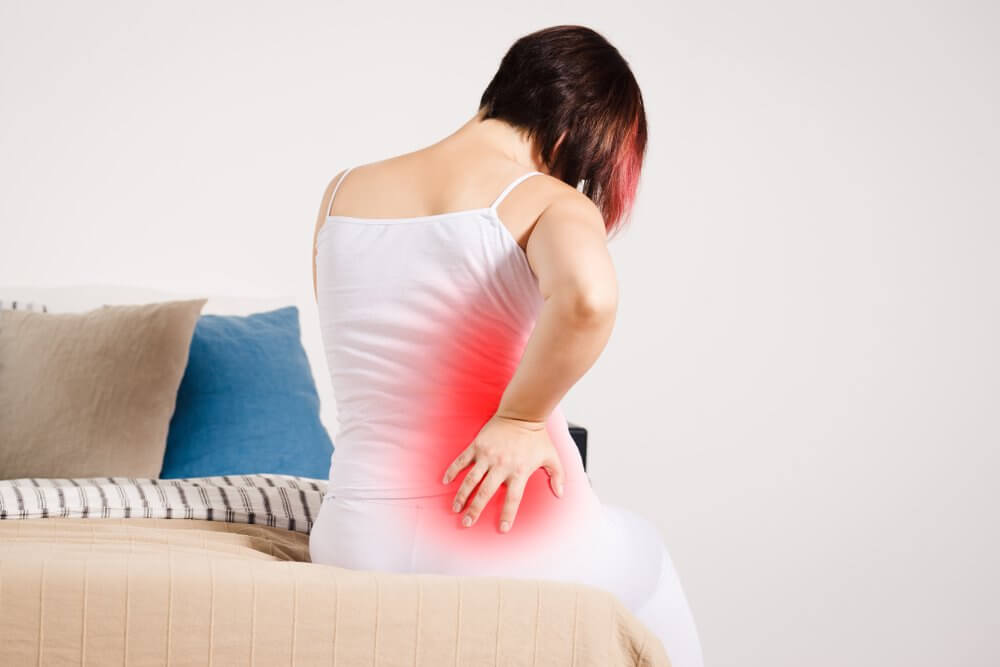
So what exactly is a “change in the way” we are standing?
Mathematically speaking, it would appear that if we were standing more upright, to begin with, our bodies would be healthier than if we were standing more “inwardly.”
It makes sense that women are more prone to lower back pain as they require an upright posture for childbearing and nursing. So for women, not only does it provide stability for their bodies but also helps them support their babies.
When we stand with less weight on our hips and knee joints, we will have less stress on these joints. It also gives us more stability because our weight is distributed over all four limbs instead of resting on just one leg or two legs. It provides a better balance between upper body and lower body strength. This results in increased speed of movement which helps prevent injury as well as better coordination of muscles and joints (i.e., better balance).
When it comes to lower back pain in women, there are several factors that contribute to this condition. One can be attributed to a limited range of motion (ROM) due to aging or injury which results in reduced flexion (flexing) of the spine; this may be a result of mild sciatica or degenerative changes associated with longstanding low-back pain (LBP).
Another factor is poor muscle tone resulting from aging or injury; this may lead to improper alignment which reduces motion at different levels of the spine such as:
- Promotes proper movement from lumbar region causing increased flexion at the L5-S1 vertebrae level;
- Promotes proper movement from sacrum region causing increased extension at L4-L5 vertebrae levels;
- Promotes proper movement from lumbar region causing increased flexion at R4-R3 vertebrae levels;
- Improves spinal erector muscle tone resulting in relaxation at level R2 vertebrae levels;
- Improves spinal erector muscle tone resulting in relaxation at level L5 vertebrae levels;
- Improves spinal erector muscle tone resulting in relaxation at level S1 vertebrae levels;

What are lower back pain symptoms for women?
Lower back pain is one of the most common medical conditions in women, affecting an estimated 80% of all women over the age of 50. It is a common condition that most women will experience at some point during their lifetime, with symptoms varying from mild to severe and with no known cause. Women are more susceptible to chronic lower back pain because they have a larger lumbar lordosis (the “arch”) and thus less stable spine postures. Other factors include:
– pregnancy
– childbearing
– childbirth
– the movement of the pelvis
– posture
– menopause
– aging (women are twice as likely as men to develop osteoarthritis)
Lower Back Pain Symptoms for Women:
- “Tenderness, sharp ache in two or more spots along the spine”
- “Aching” or “burning” in specific areas associated with the spine. This is often accompanied by numbness or tingling without pressure being applied on the area.”
- “Pain radiating down your spine and into your legs.”
- “Stiffness or pin-point tenderness along or around your buttocks.”
- “Numbness or tingling in your buttock.”
- “A burning sensation near your anus which may be accompanied by cramping and diarrhea.”
What can cause lower back pain in a woman?
Imagine how many times you’ve heard the phrase “I have pain in my back.” The reason why women have it in their backs is that they have done some or all of these things:
- Sitting at a computer for too long
- Standing for too long
- Not exercising enough
- Not sleeping enough
- Working out too much
- How to treat lower back pain in women
Lower back pain is one of the most common causes of acute pain for women with chronic low back pain.
Women are more likely to suffer from chronic low back pain than men, with 70% of women developing chronic low back pain during their lifetime. Lower back pain is reported as the leading cause of disability in the United States. In fact, the American Medical Association (AMA) estimated that 20 million Americans suffer from some form of lower back pain each year.
 This can be a very common cause for concern for women, especially if you have been experiencing this discomfort for a long period of time. In fact, according to a study published in the Journal of CNS Disorders in 2012, two out of three people say they routinely experience lower back discomfort when they stand up from sitting or lying down at work or home.
As you may know by now, being able to get around without discomfort is an important part of any woman’s life (whether you are a mother or not). If you’re having trouble getting around without feeling like your lower back hurts, then it’s important to talk with a doctor about how you can prevent this type of injury from happening again and again.
Should a Woman With Back Pain See A Chiropractor or an M.D.?

It is an unfortunate situation that too often the remedy for pain is to cover it up with a pill. And all too often an M.D. is forced to have very limited time with you to determine what is the cause of your pain. So the path that too many will take is along with the old adage of ‘take two pills and call me in the morning’ which means to give you a prescription that will cover the pain and lead to a ton of negative side effects. That is why you may want to consider going to a qualified chiropractor that can help you with prenatal chiropractic or whatever back pains you may be experiencing. If you need to see an M.D. then a chiropractor can help you make that decision, but don’t fall for the ‘pill cover-up’ method. To be clear, there are many situations that an M.D. is the best option for you and your back pain. Likewise, there are many situations when the Doctor of Chiropractic (D.C.)
Should You See A Doctor For Low Back Pain?
Lower back pain is the most common cause of back pain in women according to a study by the Department of Palliative Care of the University Hospitals, Aachen and a suburb of Cologne.
The most common cause of lower back pain for women is a herniated disc. Other causes include spinal stenosis, sciatica, sciatic nerve entrapment syndrome, carpal tunnel syndrome, and radiculopathy. Each of these does not necessarily mean you will need to have surgery. In fact, it is something to really give serious consideration before any type of back surgery. The back is such an amazing part of our body, but surgery is not kind to the back. So much so that there is actually a condition called ‘failed back surgery syndrome’ because there has been such an enormous amount of failed surgeries. I’m not aware of any other surgery that has a syndrome named for the number of times it has failed. You really may want to read those last few sentences again and then you just may want to do a Google search and search for ‘chiropractor near me.
IMPORTANT
There is a very specific time when you may need to go straight to the emergency room and not wait to see a chiropractor. If you are having symptoms include lower back pain, sensory loss (pain at the site of insertion), numbness or burning sensation over an area on one side above the pelvic floor muscle, loss of bowel control or bladder control, and ascending/descending bowel incontinence. Go to the emergency room, better yet have someone drive you and explain your situation. You may require surgery and help that only a qualified surgeon may provide.
What Can Women Do To Help Ease Back Pain?
In addition to working on preventing lower back pain, there are plenty of other ways to relieve your lower back problems other than seeing a doctor. For example, lowering your seating position and maintaining a healthy sleeping posture can help reduce your likelihood of lower back injury – not only during the day but also at night as well!

Using pillows or chair backs can be helpful too if you find yourself suffering from excessive pressure on your spine while sleeping or sitting at work or home. Getting up from laying down when you have a sore lower back will also help prevent this issue from occurring in the future!
Don’t forget about making sure that you have an adequate range of motion within your body – especially in regards to your hips and knees – because these joints are often injured more easily than other areas that are closer together such as shoulders and hips.
However, if all else fails go to a chiropractor and ask them about exercises that will help make sure these joints function properly:
- Proprioceptive neuromuscular facilitation (PNF) exercise should be reserved only for more serious conditions such as osteoarthritis and rheumatoid arthritis, but even then it should be done under medical supervision because it puts undue strain on those joints without providing additional benefits over traditional exercises such as strengthening core muscles and
How to prevent lower back pain in women
A woman’s lower back is a delicate part of the body. It is one of the most painful parts of her body. But there are many ways for women to avoid having lower back pain caused by low back pain. The best option is regular visits to a qualified chiropractor. It is important that you have regular visits because it will allow for progress versus ‘one step forward, two steps back.
Let’s be honest, most women never stop working. They work full-time at home and full-time at work. It’s no wonder they struggle with back pains. But regular visits to a chiropractor will help in a number of ways. In addition, it is important to communicate with your chiropractor your exact symptoms so that the adjustments will target your specific needs. And be sure to ask about other areas of your body that may benefit from adjustments including, but not limited to your shoulders, neck, wrists, ankles, and more.
